Product Comparison
Byoxon vs Timely: Time Tracking vs Running the Business
This article compares Byoxon (BoB) and Timely side by side, showing how a time-tracking tool differs from a full-service business management platform. It covers the main features of both systems and explains when teams should consider moving beyond basic time tracking with a powerful Timely alternative.

- Timely is a polished automatic time-tracking tool.
- Byoxon is a complete operating system built for service businesses.
The difference matters because time tracking is rarely the real end goal—predictable revenue and operational visibility are.
If your main challenge is capturing hours accurately with minimal effort, Timely does that well. If your challenge is turning work into repeatable delivery and clean billing—while keeping sales, staffing, utilization, and margins connected—Byoxon is designed for that broader job.
What Timely does well
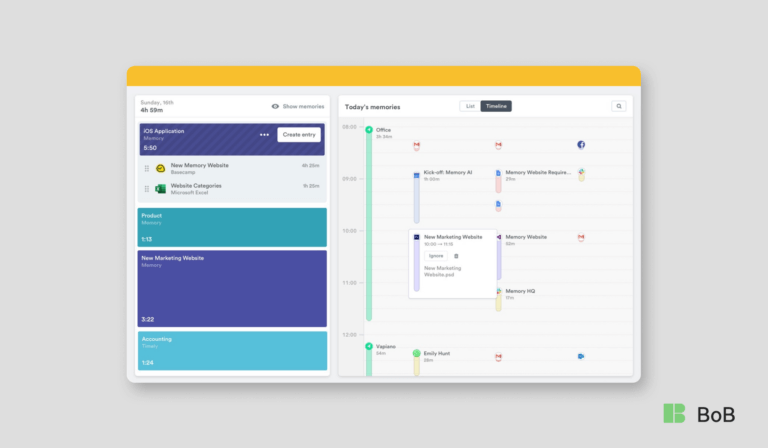
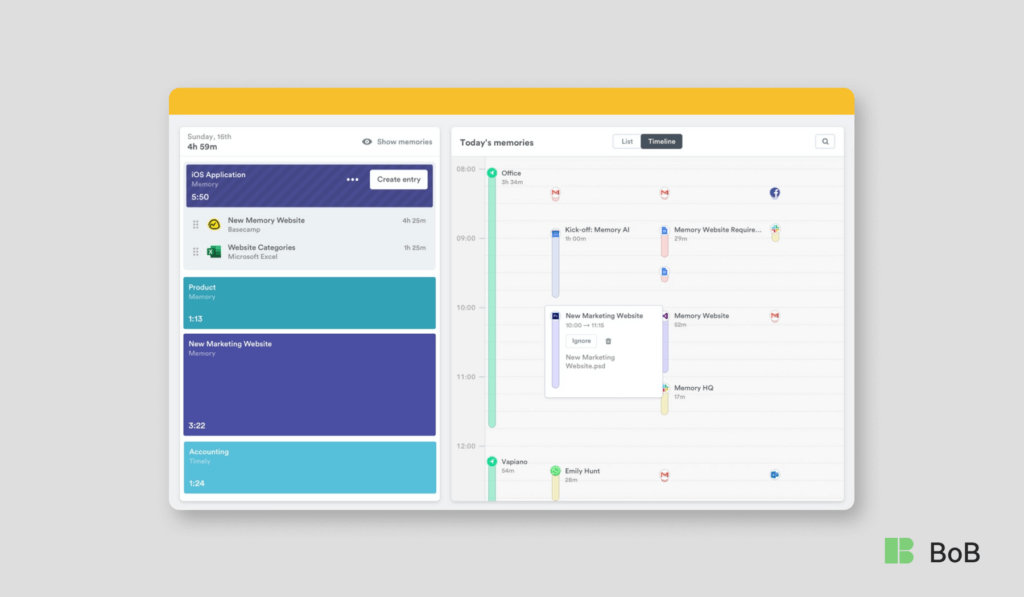
Timely is strong at what it’s meant to do: automatic time capture and simple scheduling. Teams typically like the clean UI and the way it reduces reliance on manual timers. Instead of forcing people to remember start/stop workflows, Timely helps reconstruct what happened and turns it into timesheets.
For freelancers, consultants, and small teams, that can be enough. You get reliable time logs, straightforward reporting, and a smoother path from “work happened” to “hours are recorded.” If you mainly need accurate tracking for billing or internal awareness, Timely fits that narrow use case without introducing heavier operational tooling.

Where Timely falls short for service teams
As teams grow, time tracking alone starts to feel like a partial answer. Timely largely stops at capturing hours. It does not function as a full CRM system, and it typically doesn’t connect the dots between…
- pipeline
- scope (SOW)
- staffing
- utilization
- delivery performance
- margins
- invoicing.
That disconnect becomes expensive. Time data can become isolated from business decision-making, so leaders end up rebuilding the missing context in spreadsheets: who was staffed on what, whether the project is drifting, what work is billable vs non-billable, how margins are trending, and what should be invoiced next. At that point, the team isn’t lacking time logs—they’re lacking an operating view of the business.
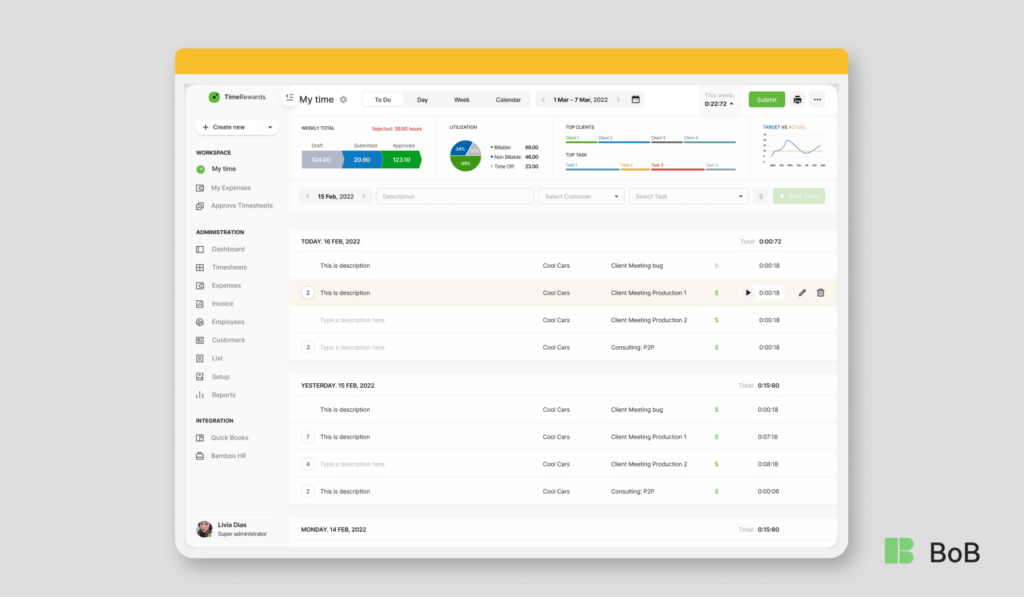
How Byoxon (BoB) is different
Byoxon is positioned as an operational layer across the service lifecycle. Instead of treating time as a standalone dataset, it links time to how service businesses actually run:
- Lead → deal → SOW → delivery → invoice
- Time tied to utilization and margins
- Visibility across distributed and nearshore teams.
The practical outcome is that time is not just tracked—it’s explained in business terms. You can see where work originates, how it moves through delivery, and how it turns into revenue. This is especially relevant for agencies and professional services teams where staffing, utilization, and margin control are not “nice to have,” but core to staying profitable.
| Feature / Capability | Byoxon (BoB) | Timely |
|---|---|---|
| Primary focus | End-to-end service business operations | Automatic time tracking |
| Time tracking | Yes – integrated with delivery, utilization, and margins | Yes – AI/automatic time capture |
| CRM / Sales pipeline | Full CRM support | No CRM functionality |
| Project delivery / SOW management | Yes | Limited (time-centric only) |
| Scheduling | Yes, tied to resourcing and delivery | Yes (basic team scheduling) |
| Invoicing / Billing | Automated invoicing tied to time & scope | No native billing (time export only) |
| Profit & Loss insights | Built-in P&L reporting | No P&L features |
| Resource / staffing visibility | Yes – utilization & capacity | Basic visibility (time only) |
| Team scale suitability | Small to mid-sized service teams and agencies | Individuals and small teams |
| Best for | Businesses that need operational visibility + financial control | Teams that mainly need accurate time capture |
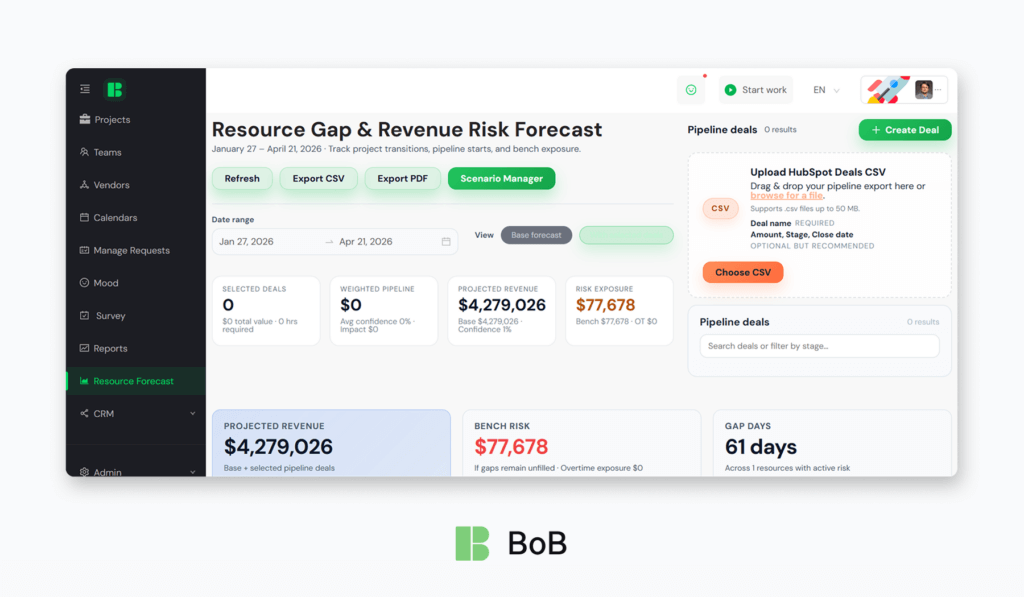
Use case: small dev team using Timely
Imagine a seven-person development team working on a few client websites and internal tools. The team doesn’t have a dedicated operations role, and most projects are billed hourly. Their main challenge is knowing how much time everyone actually spends on each task without adding process overhead.
With Timely, developers work normally, and the system automatically reconstructs their activity into timesheets. At the end of the week, the project manager reviews the logs, adjusts a few entries, and exports the data for invoicing. There is no complex setup, no heavy workflow—just a clear record of who worked on what and for how long.
In this scenario, Timely works well because the business model is simple. However, as soon as the team starts dealing with multiple clients, cross-border contractors, or margin tracking, they may begin looking for a Timely alternative that goes beyond time logs and connects time with actual business outcomes.
Use case: distributed IT team using Byoxon
Now imagine a 12–15-person IT team working with a small number of long-term clients. The team is distributed internationally, with developers, designers, and temporary subcontractors working from different countries. They don’t run dozens of projects, but they do need structure and financial clarity.
The team uses Byoxon’s built-in CRM to manage client workflows and ongoing engagements. Time tracking is combined with automated invoicing: team members log hours by task category, and the system generates custom, auto-filled invoices using local billing standards, hourly rates, and reported time.
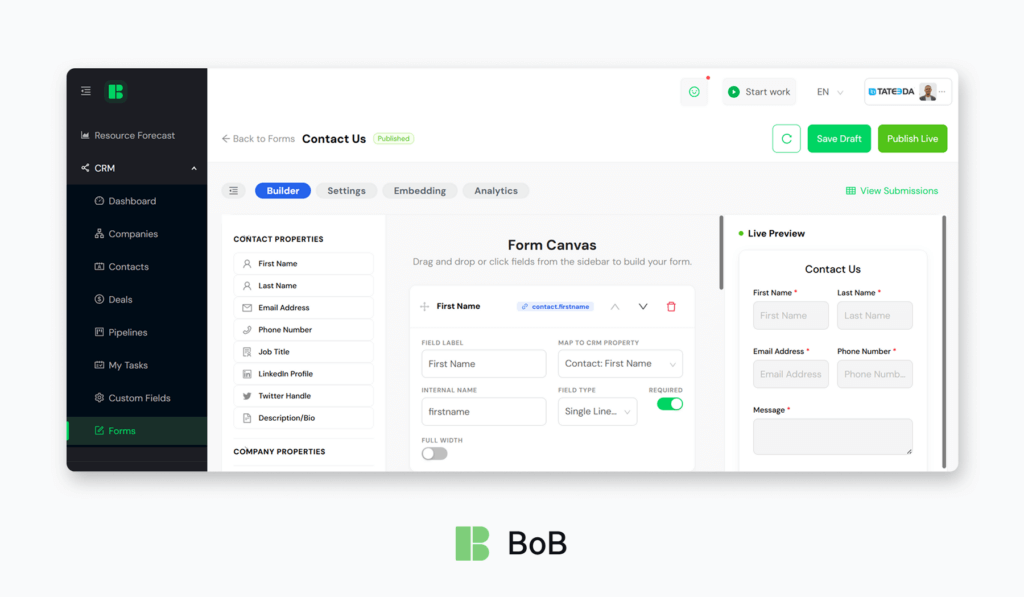
The team lead relies on P&L reports and profitability diagrams to monitor margins per project and per employee, including subcontractors who are given limited access to report time and expenses. For this kind of setup, Byoxon acts as an alternative to Timely—not just tracking hours, but explaining whether the business is actually profitable.
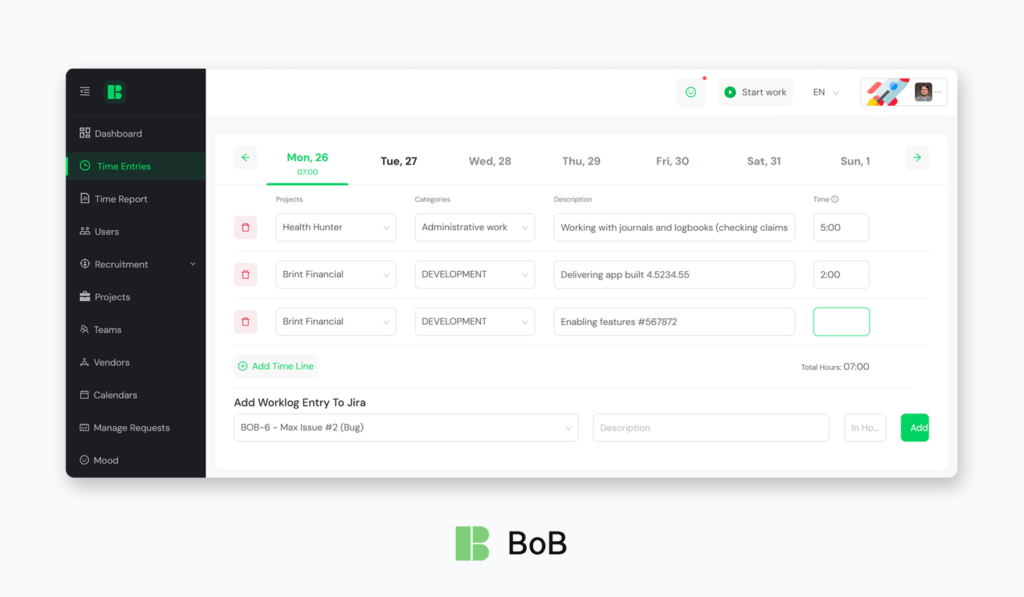
In this context, Byoxon isn’t just an app better than Timely for time tracking; it functions as an operational layer that connects people, projects, money, and reporting in one system.







![Byoxon vs Kantata: Enterprise PSA vs Modern Service Ops [Kantata Alternative Review]](https://byoxon.com/wp-content/uploads/2026/02/BoB-2-4-768x448.png)